The Stringer Documentary: My Honest Take on the Famous Leica Napalm Girl Photo
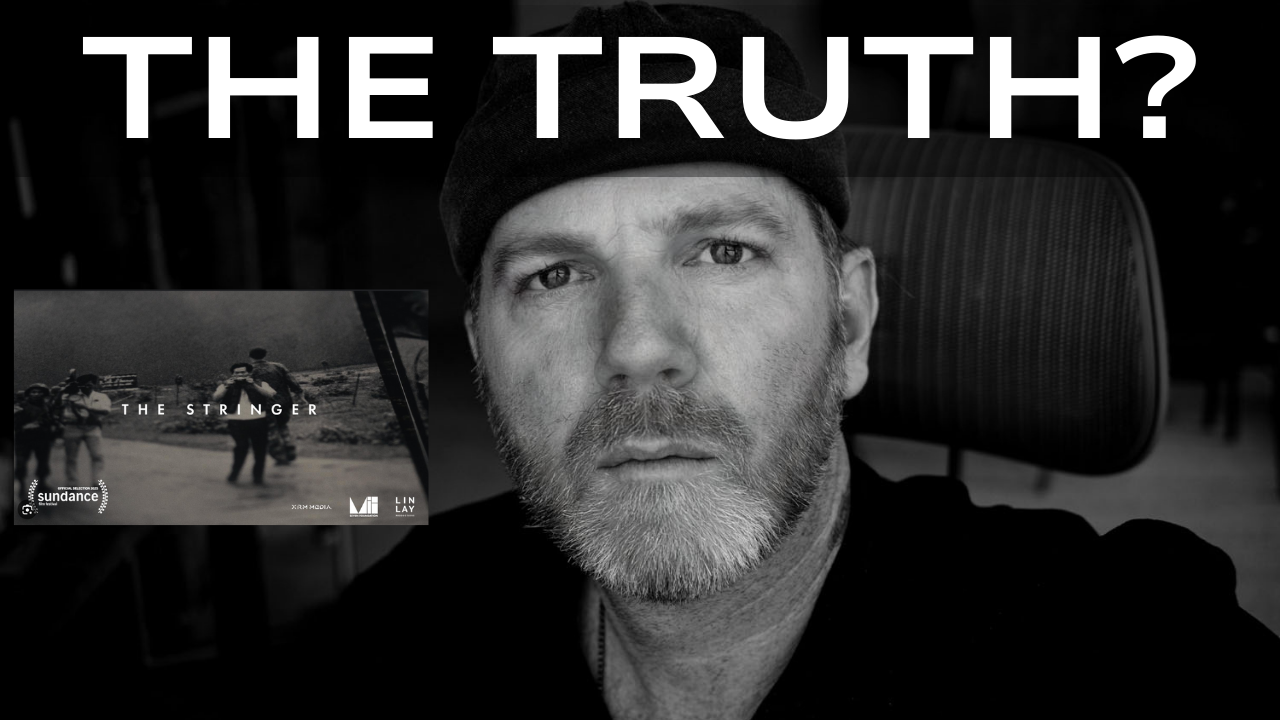
Why This Documentary Matters to Photographers
For more than fifty years, most of the world has believed a single version of one of the most haunting images in modern history: the “Napalm Girl” shot by Nick Ut for the Associated Press. It’s an image that won the Pulitzer Prize, shaped global perception of the Vietnam War, and became inseparable from Ut’s name.
But what if the story isn’t that clear?
What if the person who actually made that photograph never received credit — and never pushed for it?
A new Netflix documentary challenges the long-accepted version of events, and after living and working in Vietnam for nearly two decades — including more than 100 New York Times assignments here and across Southeast Asia — I felt compelled to share my thoughts. I’ve waited nearly a year to watch this documentary, and now that I finally have, here’s my honest take.
Before we dive in: this post contains spoilers, and these are my personal opinions.
Why This Story Hits Close to Home
Beyond my professional work in Vietnam, I also have a personal connection to this film. Gary Knight — a legendary conflict photographer, educator, and co-founder of VII Photo Agency — was part of the team behind this documentary. I don’t know Gary deeply, but I know him well enough to describe him as principled, thoughtful, generous, and allergic to nonsense. He’s someone who has shaped our industry in meaningful ways.
As for Nick Ut, I don’t know him either, but many people I respect speak incredibly highly of him. I’m not from his era, I’m not competing with him, and I gain nothing from having a strong or controversial opinion here. If anything, I get anxious covering polarizing topics — but photographers and students have been asking for my thoughts for months.
So here we are.
The Heart of the Documentary’s Claim
The film suggests something major:
Nick Ut did not take the Napalm Girl photo.
Instead, it argues that the real photographer was Nguyễn Thanh Nghệ, a Vietnamese stringer working for the AP who lived quietly, never sought the spotlight, and never received credit.
The film builds its argument around several points:
Karl Robinson, a former AP photo editor, claims his boss Horst Faas instructed him to credit Nick Ut rather than Nghệ.
Ut was a freelancer — higher on the ladder. Nghệ was a stringer — at the bottom.
Nghệ’s family says he talked about taking the image throughout his life.
Nghệ said Horst Faas paid him for the photo and even gave him a print. Faas would have no reason to do that unless Nghệ made the image.
Yes, the print was later destroyed, but the wife kept clippings of the image. Small details like that matter.
The Forensics: The Most Convincing Part
Here’s where the documentary got my attention.
A forensic imagery team analyzed:
historic footage from the same day
satellite imagery
lens characteristics
angles, distances, shadows
the physical negative
Their conclusion?
Nick Ut wasn’t in a position to make that frame — especially not with a 35mm lens.
Meanwhile:
Nguyễn Thanh Nghệ was in the exact right position
He was shooting a Pentax, which matches the negative’s rounded corners
He was documented to be at the scene
His account aligns with physical evidence
And speaking from nearly 20 years photographing chaotic, emotional news environments:
during moments like this, no one is watching other photographers closely.
The claim that “I saw Nick take the photo” doesn’t hold up in real-world experience.
Why Didn’t Nghệ or Robinson Speak Up Earlier?
A lot of people asked this, but the answers feel logical:
Nghệ was a refugee. His priority was survival, not recognition.
Credit wasn’t a cultural expectation for local stringers.
Why would a Vietnamese refugee challenge the AP in the 1970s?
Nghệ did tell his family and colleagues for years — he just didn’t do it publicly.
Robinson raised concerns quietly for decades, long before the documentary.
And importantly:
Many western critics of the film have not spoken with the Vietnamese journalists closest to the story.
I have.
They believe Nguyễn Thanh Nghệ.
The AP later reviewed the evidence and called the case “inconclusive.”
They didn’t dismiss it.
They didn’t debunk it.
They simply left the door open.
That’s telling.
The Documentary Isn’t Perfect — But That’s Not the Point
There are parts I didn’t love:
The opening line (“A photographer knows the photos he didn’t take”) feels too accusatory.
A few moments felt overly cinematic.
But none of that undermines the evidence.
The heart of the film is not its style —
it’s the logic, the positioning, the footage, the lens analysis, and the testimony.
And all of those, to me, are convincing.
The Question I Asked Myself
The documentary leaves you with two possible scenarios.
Scenario 1:
An AP editor, in the chaos of war, makes a split-second unethical decision to credit the wrong photographer.
That error snowballs into a historic image.
Over time, memories blur.
Nick truly believes he took the photo.
The community reinforces it.
Or…
Scenario 2:
Karl Robinson fabricated everything.
He convinced another photographer to join the lie.
He fooled the forensic team.
He fooled Gary Knight.
He fooled the documentary crew.
He fooled local journalists.
And World Press Photo revoked accreditation of an awarded photo, something they haven't done in 70 years.
One of these scenarios is vastly more plausible.
Where I Stand
I don’t know for certain.
None of us do.
But after watching the film, studying the evidence, speaking with people close to it, and relying on my own experience:
I believe Nguyễn Thanh Nghệ took the photograph.
I feel for Nick Ut.
I feel even more for Nghệ — a man who lived his life without the credit he deserved.
The documentary isn’t perfect justice.
But it’s a start.
It also opens a larger discussion about how local photographers — especially during wartime — have historically been overlooked.
That conversation is overdue.
Let me know your thoughts in the comments.